

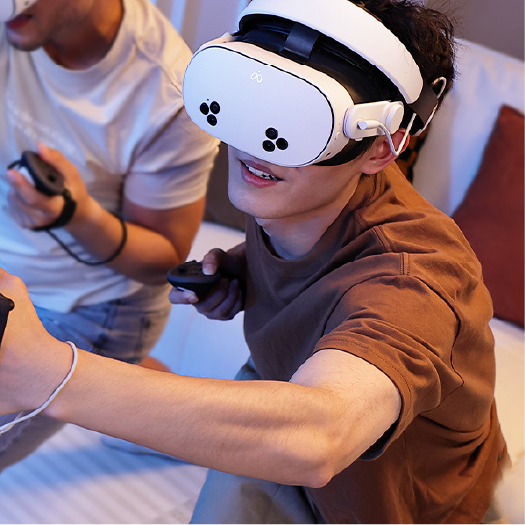




A technical examination of torque mitigation and ergonomic pressure redistribution for Quest 3/3S.
For standalone VR headsets, the physical constraint of "Front-Loading" remains the primary barrier to long-term physiological sustainability. This analysis examines the biomechanical principles behind the H4 Boost and K4 Boost, focusing on torque mitigation and structural decompression.
1. The Mechanics of Cervical Strain
A standard headset operates as a cantilevered load. Since the mass is situated approximately 8–10cm in front of the cervical pivot point, it generates a significant forward rotational moment.
According to research on cervical spine loading (Hansraj, 2014), the posterior neck muscles must engage in constant isometric contraction to maintain equilibrium. KIWI design's engineering goal is to reduce the lever arm (d) by shifting the system's center of gravity (CoG) rearward.
2. K4 Boost: Axial Equilibrium via Counter-Leverage
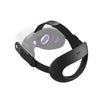
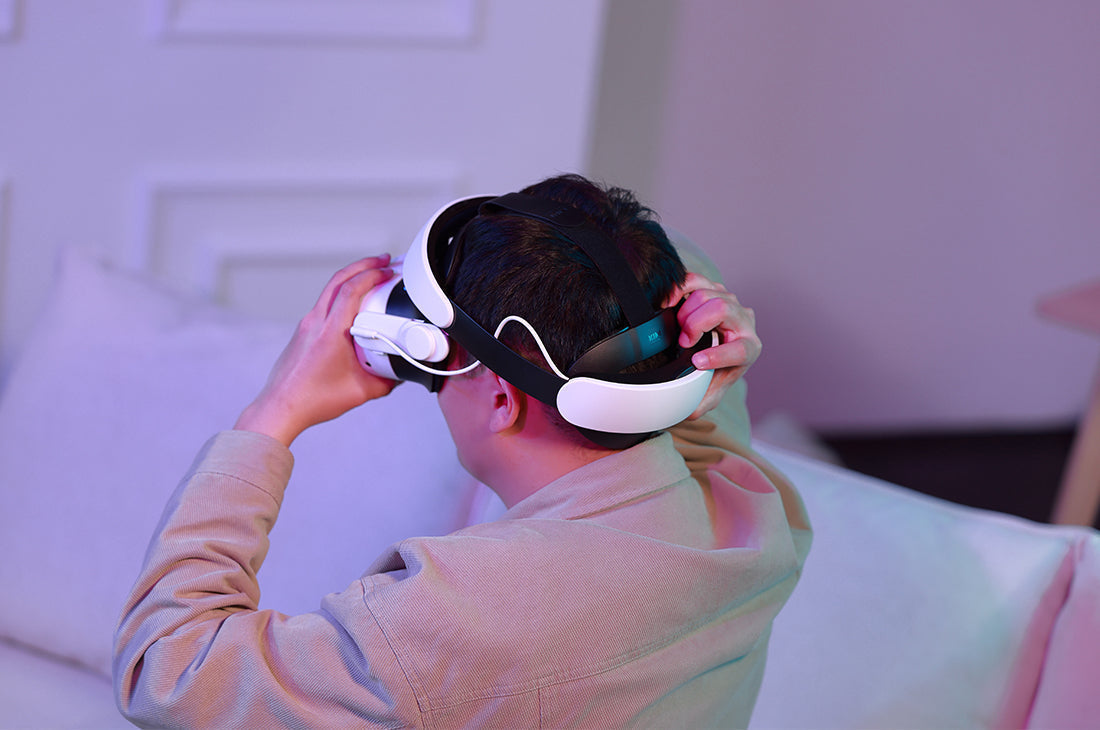
The K4 Boost utilizes a balanced-lever system. By integrating a 5000mAh battery into the rear cradle, it shifts the combined CoG back toward the atlas (C1) vertebra.
- Occipital Anchorage: The strap secures below the external occipital protuberance, utilizing the skull's geometry to prevent slippage without excessive side-strap tension.
- Kinematic 52° Hinge: This allows the user to align the strap’s tension vector with their specific cranial morphology, minimizing shear stress on the dermis.
- Supine Position Neutrality: The low-profile rear knob ensures the cervical spine remains in a neutral anatomical position during reclined media consumption.
3. H4 Boost: Frontal Bone Suspension Architecture
The H4 Boost (Halo) design is engineered for Periorbital Decompression, shifting weight from the sensitive facial nerves to the robust frontal bone.
Facial tissues around the infraorbital margin are highly vascularized. The H4 Boost bypasses these areas by using the forehead as the primary structural anchor. This allows for an "open-face" configuration, eliminating the micro-climate heat buildup that causes lens fogging and ocular fatigue.
| Design Feature | Physical Principle | Physiological Benefit |
|---|---|---|
| Rear Battery Load | Counterweight Leverage | Reduced cervical muscle ischemia. |
| Frontal Support Pad | Load Suspension | Elimination of sinus and orbital pressure. |
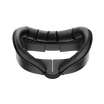
| Porous TPU Foam | P = F / S | Lowered unit area pressure via surface maximization. |
[1] Hansraj, K. K. (2014): "Assessment of stresses in the cervical spine caused by posture and position of the head." Surgical Technology International.
[2] Knight, J. F., & Baber, C. (2005): "Predicting the physical cost of computing." International Journal of Human-Computer Studies.
[3] ISO 9241-920: "Ergonomics of human-system interaction — Guidance on tactile and haptic interactions."


Leave a comment
All comments are moderated before being published.
This site is protected by hCaptcha and the hCaptcha Privacy Policy and Terms of Service apply.